Similar tarot cards: how to tell them apart
Some cards share colors, figures or moods and are easy to confuse. Here is a calm method for comparing them by what is actually drawn.
By TaronicaPublished
In short
- Similar tarot cards share a mood, a color or a figure, but they differ in number, suit and the scene drawn on them.
- A reliable way to separate them is to compare five things in a fixed order: number, suit, figures, setting and direction of movement.
- Differences also depend on the deck, so a comparison always starts from one named deck.
What are similar tarot cards?
Similar tarot cards are cards that are easy to mix up because they share something visible: a mood, a palette, a number of figures or a type of scene. The likeness is usually on the surface, while the structure underneath is different. A card from the suit of Cups and a card from the suit of Swords can both show a lonely person, yet they belong to different families.
This article is a hub for the "Card vs card" series. It does not give a meaning for each card. It shows how to look at two cards side by side and find what separates them.
The approach is closer to a museum label than to a reading. You describe what is on the card, note what is different, and only then consider how the tradition has read it.
Why do some cards look alike?
There are three common reasons. The first is shared theme: several cards deal with loss, departure or upheaval, so the pictures borrow similar gestures such as a bowed head or a turned back. The second is shared palette, since a deck uses a limited set of colors and the same blues, yellows and grays return again and again.
The third reason is the deck's own design. In the Rider-Waite-Smith deck, published in 1910 after Pamela Colman Smith was commissioned in 1909 by Arthur Edward Waite, every card carries a small scene, including the numbered suit cards. That makes the pips easier to compare with each other, but it also creates many near neighbors. The V&A catalog entry (opens in a new tab) gives the basic history.
Older decks, by contrast, often show only repeated symbols on the suit cards. Confusion there comes from counting, not from scenes.
How to compare two cards step by step?
A fixed order keeps you from relying on first impressions. Try these five checks, one after another, with the two cards in front of you.
- Number: is it a Major Arcana numeral, a Minor rank or a court rank?
- Suit: Wands, Cups, Swords or Pentacles, each with its own element in the usual scheme.
- Figures: how many people, who is facing whom, and who is active or still.
- Setting: indoors or outdoors, water or land, day or night.
- Direction: does the movement go toward something, away from it, or downward?
The first two checks settle most doubts. Suit tells you the family of the card, and number tells you its place in a sequence. Figures, setting and direction then explain why the pictures felt alike.
Say you hold two cards that both show a person with their back to you. Number and suit may differ at once, and you have already learned more than the mood could tell you.
How do the Six of Swords and Eight of Cups differ?
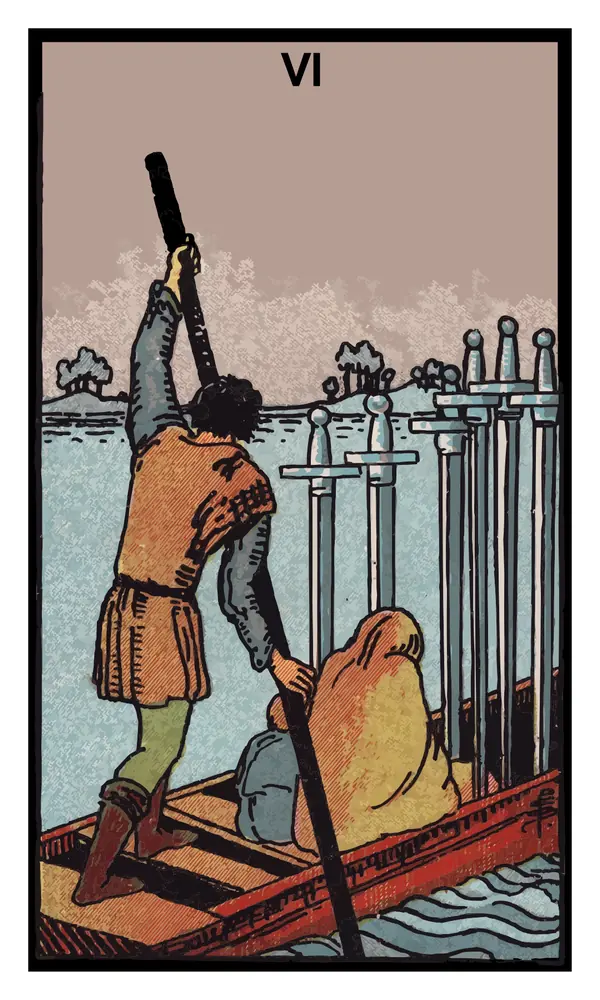
These two are a classic pair because both are traditionally linked with leaving. Their images, however, are built differently. The Six of Swords shows a ferryman poling a boat with a woman and a child, with six swords standing upright in the boat. The Eight of Cups shows a single figure walking away on foot from a neat stack of eight cups, under a moon.
- Six of Swords
- Eight of Cups
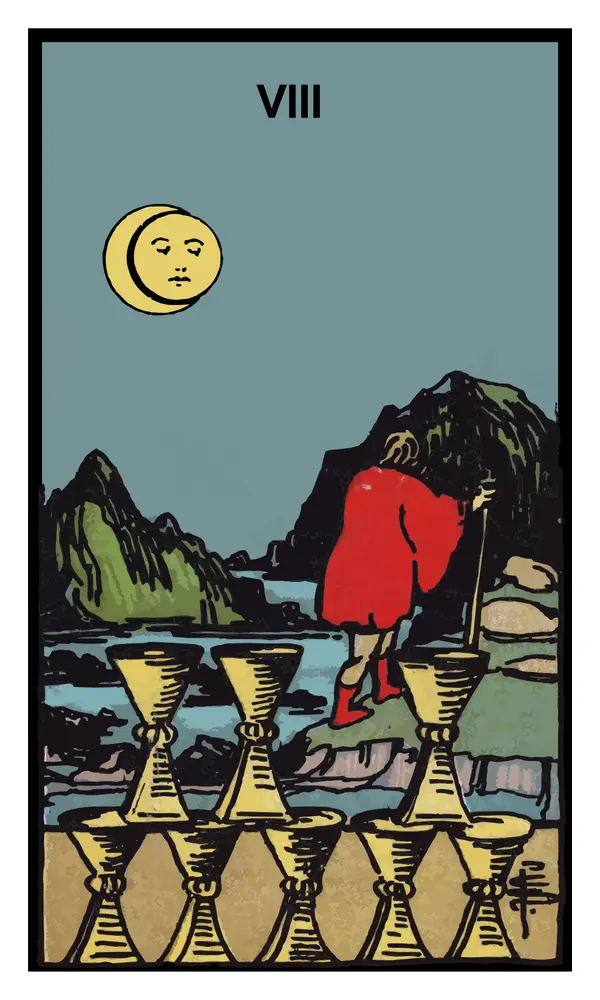
Compare them with the five checks. Numbers are close, six and eight, but the suits differ, Swords and Cups, so the air and water families are not the same. The Six of Swords has company and a guide, and the water around the boat changes from rough to calmer. The Eight of Cups has no companion, and the cups are left standing behind.
In the tradition, one is often read as a transition carried out with help, the other as a departure chosen alone. That is a reading of the images, not a rule, and your own description of the scenes is the safer starting point.
How do the Tower and Death differ?
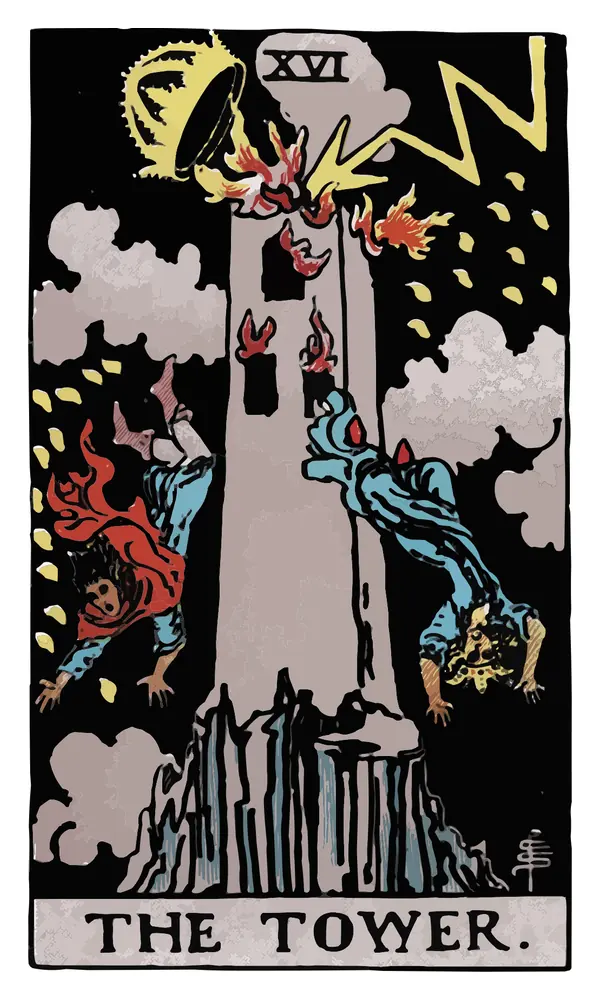
The Tower and Death are both Major Arcana cards that people tend to fear, so they are often lumped together. Their numbers are different, XVI and XIII in the usual numbering, and so are their pictures. The Tower shows a building struck by lightning, a crown knocked off and two figures falling. Death in the Rider-Waite-Smith deck shows an armored skeleton on a white horse, with figures of different ranks before it and a sun between two towers in the distance.
- The Tower
- Death
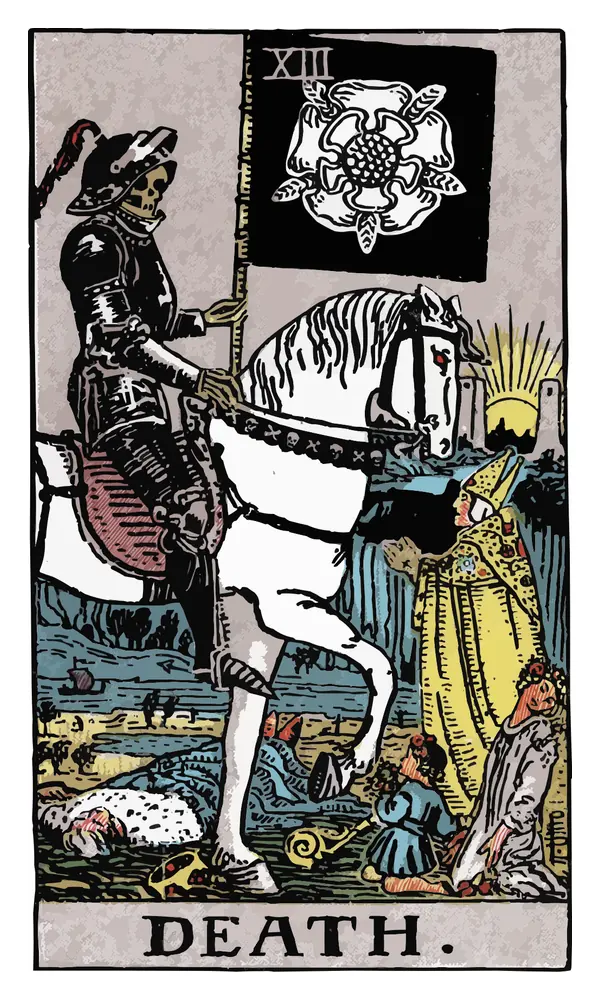
Look at direction and pace. The Tower is vertical and abrupt, with things falling down. Death moves horizontally, in a measured walk, and the figures respond to it in different ways. In the tradition, the first is often tied to sudden collapse of a structure and the second to an ending that makes room for something else.
A longer side-by-side reading of this pair is linked below.
Card combinations
The Tower and Death together: how the pair is read
Two of the most feared trumps side by side: what each one shows, why the pairing is a modern habit, and how order and position can shape a reading.
· Taronica
Which other pairs are often confused?
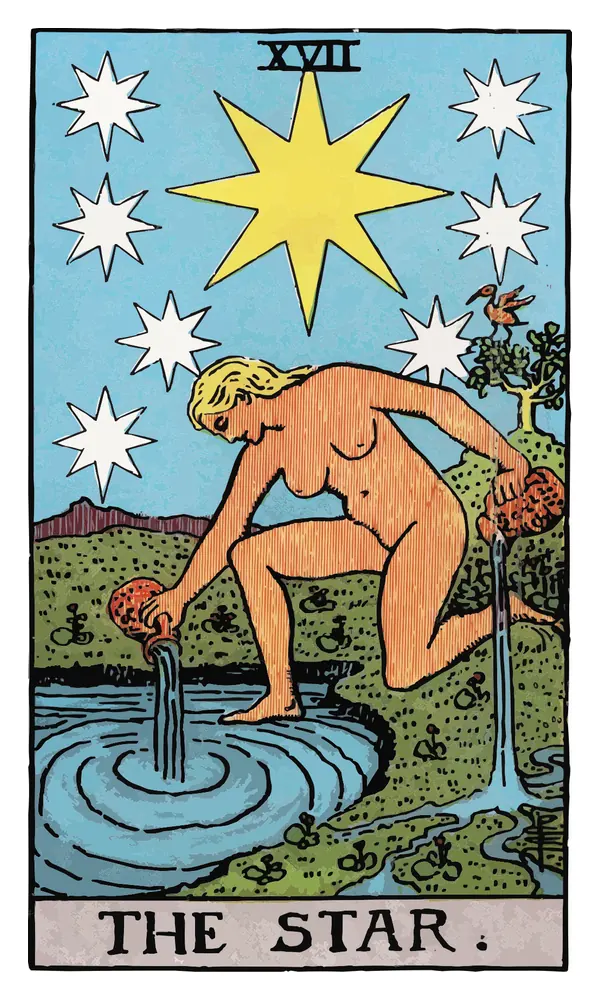
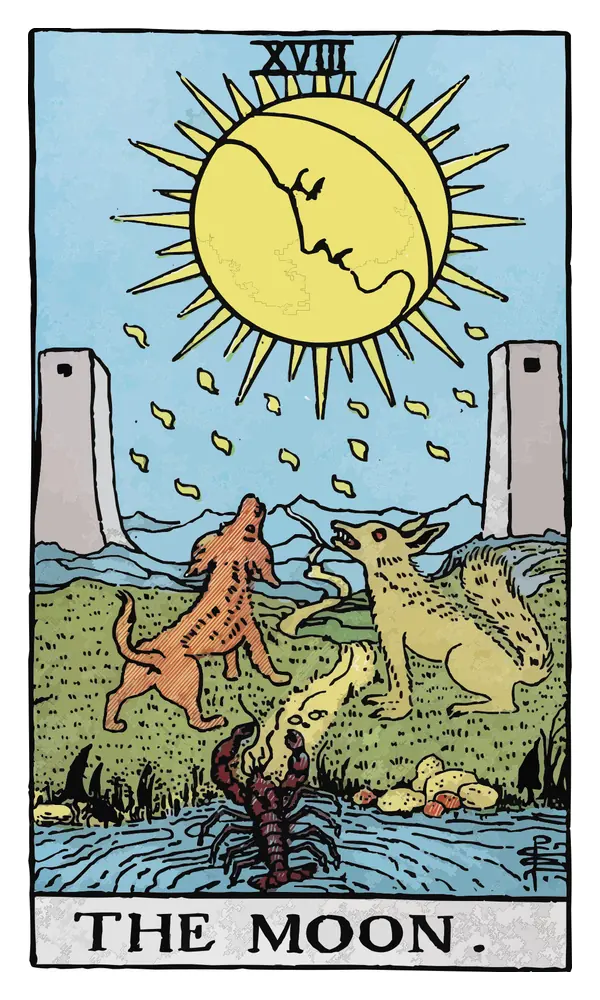
Many pairs share a palette or a theme rather than a suit. The Star and the Moon both show a night sky and water, but the Star pictures an open figure pouring water under many stars, while the Moon shows a path between two towers with a dog, a wolf and a crayfish. A longer comparison of the two is linked below.
Card combinations
The Star and the Moon together: hope in uncertain light
What does it mean when the Star and the Moon land in one spread? Here is how the two neighboring cards are built, what they share, and how the tradition reads them as a pair.
· Taronica
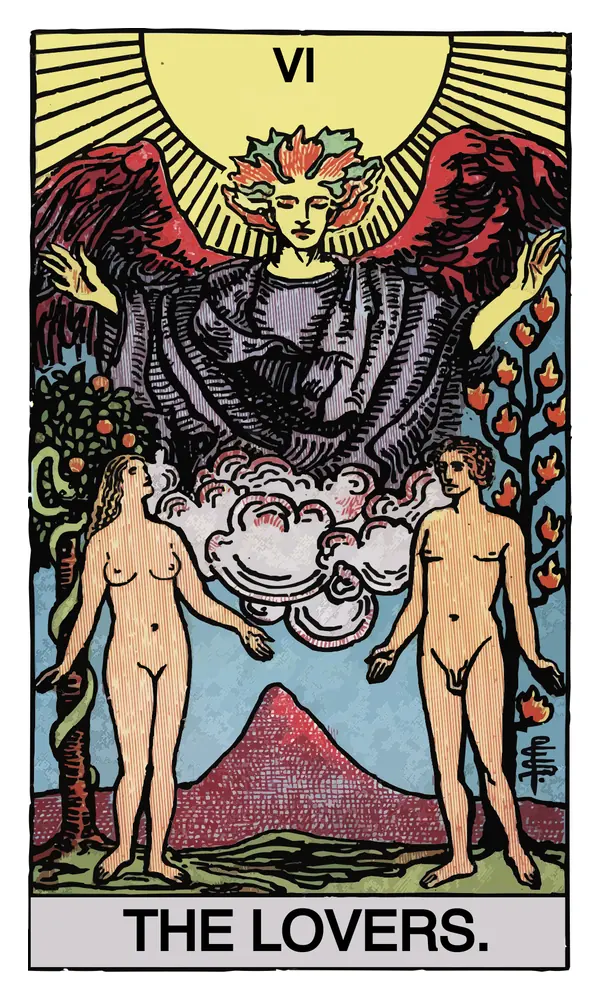
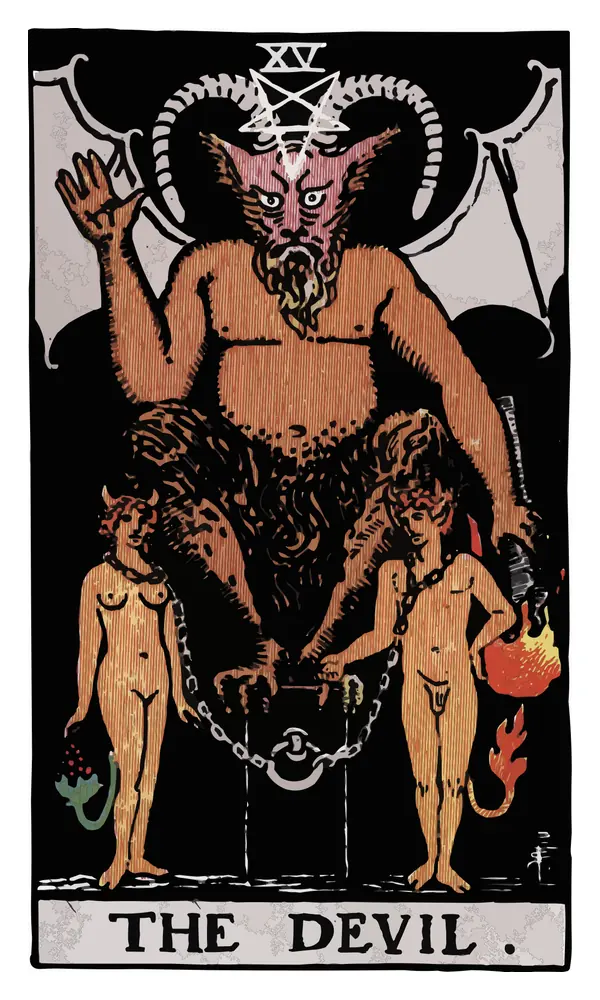
The Lovers and the Devil are another well-known pair, since both show two figures with a larger figure above them. The difference lies in the posture of the pair: free and facing each other in one, chained at the neck in the other. The full comparison is linked below.
Card combinations
The Lovers and the Devil together: choice and attachment
What does it mean when the Lovers and the Devil appear side by side? This guide separates what the tradition records from what modern readers add, and shows how to read the pair as choice versus attachment.
· Taronica
- The Star
- The Moon
- The Lovers
- The Devil
When you meet a new pair, the same method applies. The table at the end of this article summarizes the pairs discussed here.
Does the deck change the comparison?
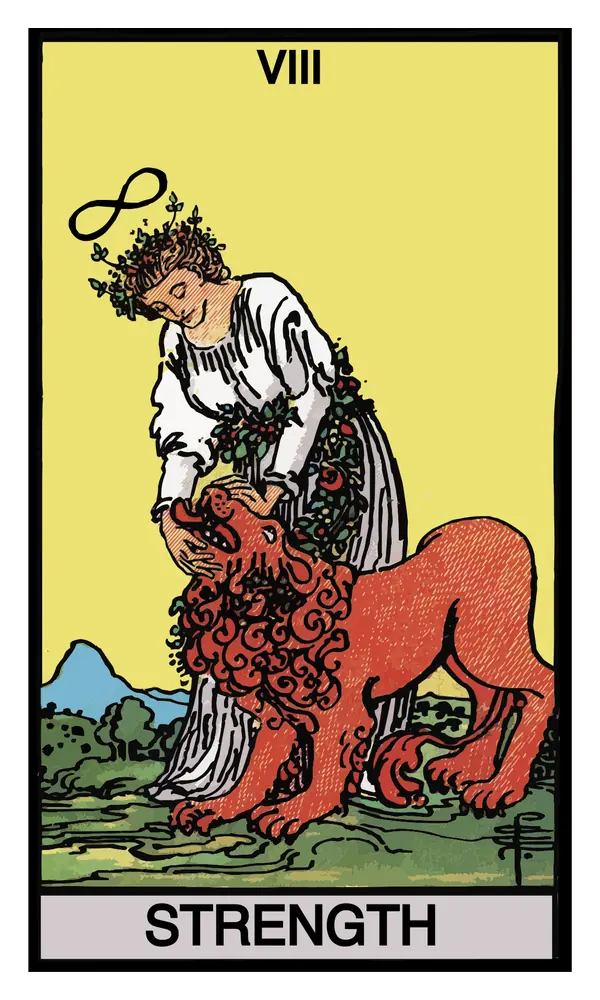
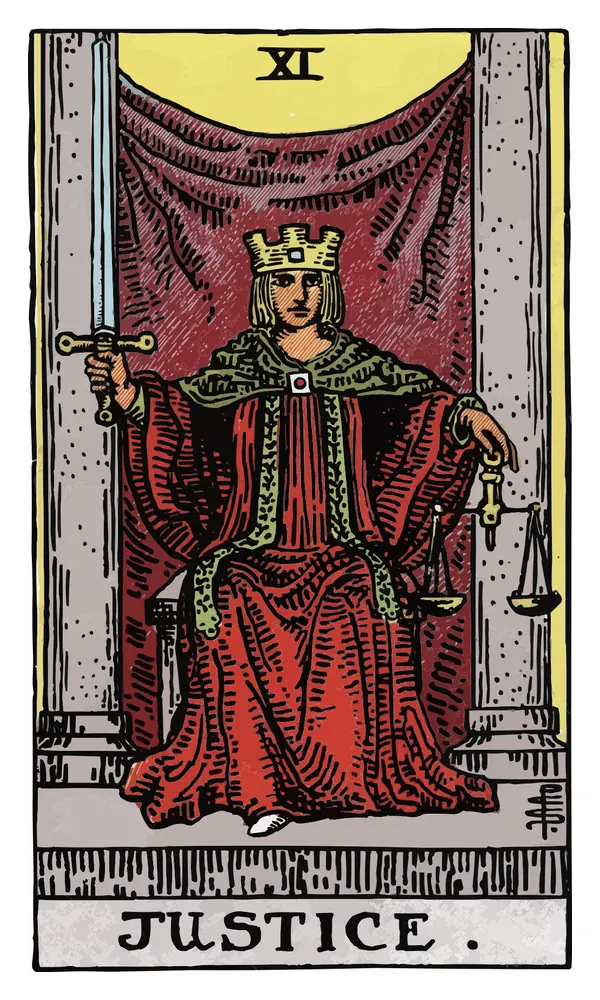
Yes, and this is the point many quick guides skip. A comparison is only accurate within one deck, because numbering and imagery vary. The clearest case is Strength and Justice. In many older decks Strength is XI and Justice is VIII, while the Rider-Waite-Smith deck swaps them, so Strength is VIII and Justice is XI.
The usual explanation is that the swap was made to fit astrological correspondences, as this Taroticallyspeaking article (opens in a new tab) summarizes. Since that is a secondary source, treat the reason as a commonly cited account rather than a settled one.
- Strength
- Justice
The practical lesson is simple. Name your deck first, then compare. If a guide says a card is number eight, check whether it means your deck's numbering.
How to practice telling cards apart?
Pick one pair and spend ten minutes with it, without looking up any meaning. Write down the number, suit, figures, setting and direction for each card, then underline only the differences. Do this for a few pairs and the habit becomes quick.
If you draw a card in a spread and it seems to resemble another, put both on the table and run the five checks before you decide what you saw. For a short exercise, a simple draw such as the three-card spread gives you three cards to compare with each other.
Tool on Tarot Told Me
Three-card spread
A three-card draw gives you a small set of cards to describe and compare one by one.
Tarot Told Me (opens in a new tab) is a reflective tarot app from the team behind this site.
What should you remember about look-alike cards?
A resemblance is a starting point for looking closely, not a reason to merge two cards. Number and suit tell you the family, and the scene tells you the details. Direction of movement is often the quickest way to separate cards of a similar mood.
Keep the deck in mind, avoid treating any single comparison as a verdict, and describe before you interpret. If a question touches health, money or legal matters, bring it to a professional rather than to a card.
| Pair | What they share | Quick check |
|---|---|---|
| Six of Swords and Eight of Cups | Leaving, water, a turned back | Boat with passengers or a lone walker |
| The Tower and Death | Fear, endings, Major Arcana | Falling from above or a slow procession |
| The Star and the Moon | Night sky, water | Open figure or path between two towers |
| The Lovers and the Devil | Two figures below a larger one | Free and facing or chained |
| Strength and Justice | Major Arcana, a female figure | Numbers VIII and XI swap between decks |
Frequently asked questions
Usually a shared theme, a shared color palette or a similar composition, such as one figure walking away or two figures below a larger one. Different suits and numbers often hide beneath the likeness.
Check number and suit first, since they place the card in its family. Then compare figures, setting and the direction of movement. Most confusions are settled by those five checks.
Yes. Numbering and imagery vary, as the Strength and Justice swap shows. Name the deck before comparing, and use the Rider-Waite-Smith deck if a guide does not say.
Not at first. Learning what is drawn on each card is a steadier base, and traditional readings are easier to remember when they are tied to images.
No. Traditional readings differ even when the pictures feel close, which is why the comparison method looks at structure first. Treat any reading as a tradition, not a rule.