Monthly tarot spread: start the month with four questions
A printable four-card layout for the first days of a month, with the questions behind each position and a way to review it later.
By TaronicaPublished
In short
- A monthly tarot spread is a short layout drawn once, at the start of a month, to organize your attention.
- This template uses four cards, one for each of four plain questions, and it fits on a single printed page.
- The format is a modern convention, offered here as the blog's own template rather than a historical method.
What is a monthly tarot spread?
A monthly tarot spread is a small layout of cards drawn once, usually in the first days of a month, and read as a set of prompts for the weeks ahead. There is no official version of it. Readers build their own, and this one uses four cards.
The idea is closer to a planning page than to a forecast. Each position holds a question, and the card drawn there is treated as a picture to think with. In the tarot tradition cards are read as symbols, so what you take from them stays a matter of your own interpretation.
Why four questions instead of one?
A single card drawn for a whole month has to carry a lot. A month contains work, rest, people and plans, and one image rarely covers all of that. Splitting the month into four questions gives each theme its own small space.
Four is also a practical number. It fits in one row on a table, it is easy to print, and it can loosely echo the four weeks of a month if you want it to. Tarot itself leans on fours: four suits, four court ranks, four elements in the usual associations.
The limit helps in another way. With only four positions, you cannot drift into pulling card after card until something sounds agreeable.
How is the layout arranged?
Lay the four cards in a single row from left to right, numbered one to four. Left to right gives a natural order: where the month begins, what takes your attention, what supports you, and what you might adjust.
If you prefer a square, place the cards in two rows of two. The order stays the same, and the shape suits a printed page with four boxes. Nothing in the tradition requires either arrangement.
| Position | Question | Writing prompt |
|---|---|---|
| 1 | What am I carrying in from last month? | Name one thing unfinished and one thing completed. |
| 2 | What deserves most of my attention? | Choose one priority and write why. |
| 3 | What could support me? | List people, habits or resources already available. |
| 4 | What am I willing to adjust? | Write one small, specific change. |
What are the four questions?
Each question is phrased to look back, look at, look around and look forward. They are deliberately plain, so that any card can be read against them without strain.
- Carrying in: what from the previous month is still with you, whether as a habit, a worry or a finished project.
- Attention: where your time and energy are likely to be asked for, based on what you already know of your calendar.
- Support: what is already in reach, such as a routine, a friend or a skill.
- Adjustment: one change you are free to make, kept small enough to try.
Notice that none of the four asks what will happen. They ask what you notice, which is a question a card can help you phrase but never answer for you.
How to read the four cards together?
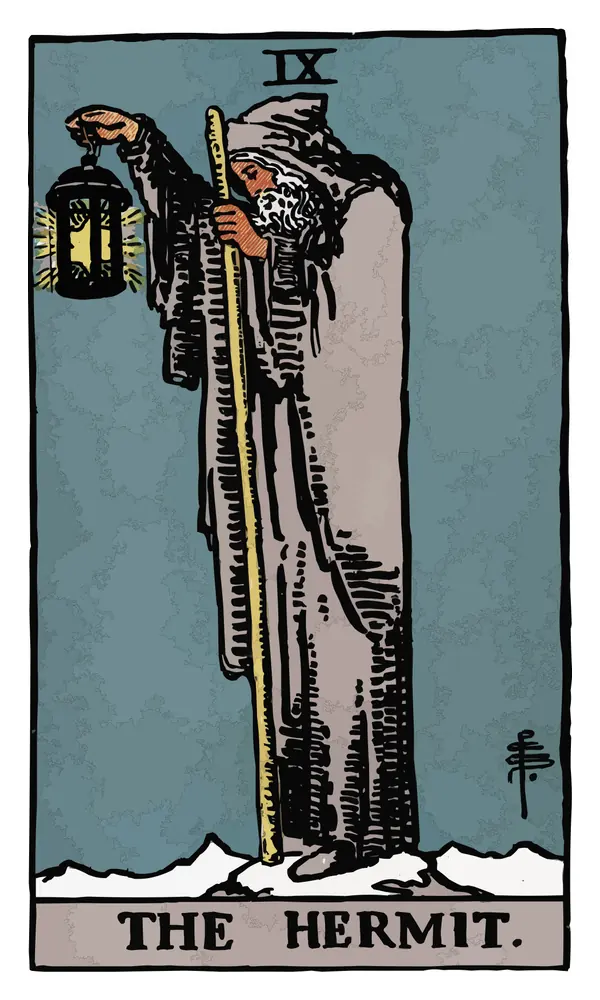
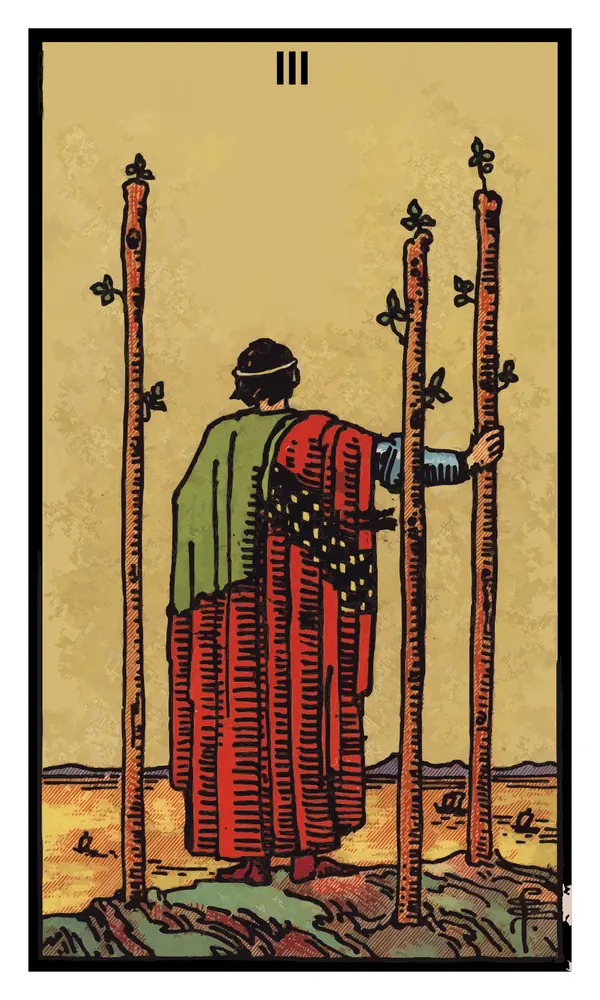
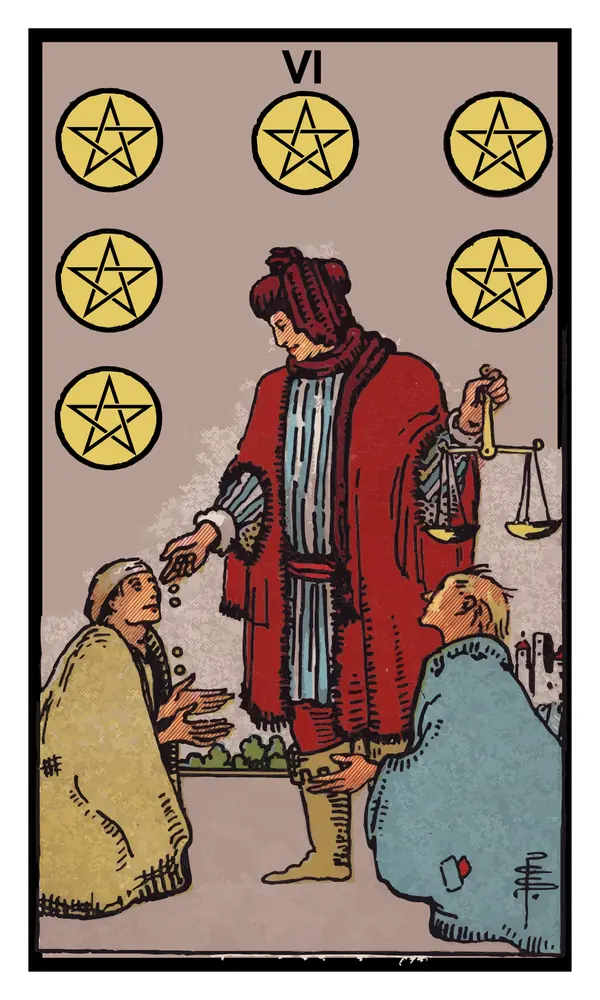
Read each card against its own question first, in order, and write a sentence for each. Only then look at the row as a whole. Say you draw the Hermit in the first position, the Three of Wands in the second and the Six of Pentacles in the third. You might notice a solitary stretch turning into outward planning, with exchange or sharing available as support.
- The Hermit
- Three of Wands
- Six of Pentacles
That is one possible reading, not the reading. Another person might see the same row differently, and that is acceptable. Look for repeated suits, for a run of Major Arcana, or for a gap where a suit is missing, and treat these as observations to question rather than conclusions.
For more on pairs and patterns, see the guide below.
Card combinations
How to read tarot card combinations
Tarot card combinations are read as a phrase, not as two separate answers. Here is a three-step method built on suits, numbers, and images, with a table of suit pairs.
· Taronica
Why might the Wheel of Fortune suit a monthly cycle?
Any card can appear in this spread, but the Wheel of Fortune is a fitting emblem for it, and it is the image on this article's cover. The Wheel is traditionally associated with cycles and turning points, which echoes the way a month opens and closes on a calendar.
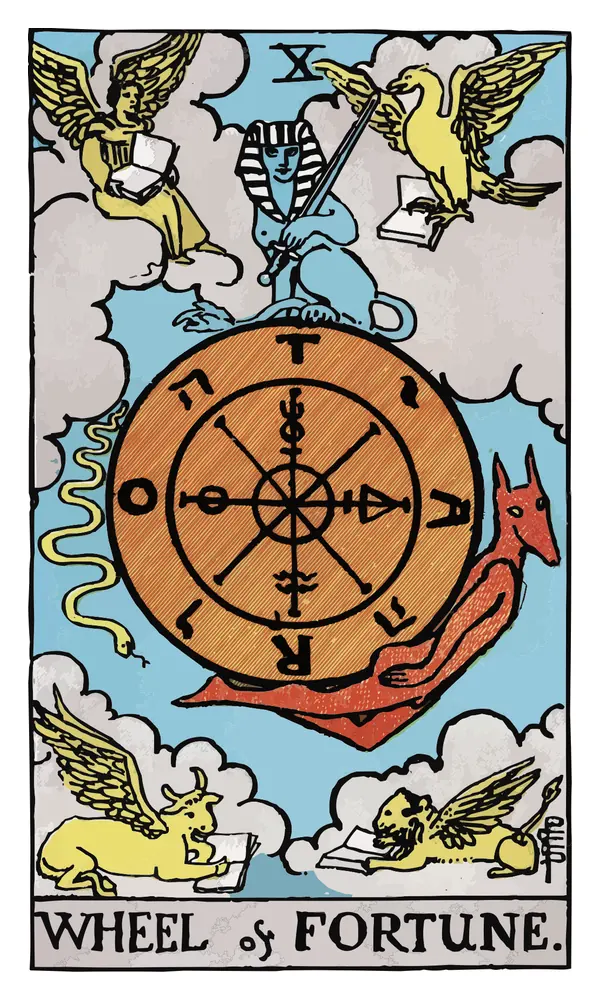
Wheel of Fortune
The Wheel of Fortune, a card often linked with cycles, used here as a symbol of the monthly rhythm.
Read about Wheel of Fortune on Tarot Told Me (opens in a new tab)If it falls in your row, it is worth asking which cycle the position is pointing to. A habit that keeps returning, a season of work or a recurring conversation are all candidates. The card does not say how things will turn. It gives you an image of turning to reflect on.
Where does a format like this come from?
Tarot began in fifteenth-century northern Italy as a set of playing cards for trick-taking games, and the earliest name was trionfi. The oldest surviving cards, the Visconti-Sforza deck, date from around the middle of that century. Using tarot for divination has no documented history before the eighteenth century.
So spreads of any kind are much younger than the cards. A monthly layout with four questions is, as far as we know, a modern informal habit rather than an inherited method. We found no authoritative source for a standard version, and so this one is presented as our own template. You may change it freely.
Similar calendar-based layouts exist for particular moments, such as the one in the article below.
Spreads
New moon tarot spread: a monthly intention in four cards
A new moon tarot spread uses four cards to frame one month: what to release, plant, nurture and do. Here is how the layout is built and how to read it calmly.
· Taronica
How to draw and print the template step by step?
Try the following routine on the first or second day of the month. A December page works exactly like any other, so the template can be prepared in the last days of November if you like to plan ahead.
- Print or copy the four-row table above, leaving space beside each question.
- Shuffle in whatever way you like and draw four cards, placing them in order.
- Write one or two sentences for each position before reading the whole row.
- Add a date and a single line for the month's overall focus.
- Keep the page somewhere you will see it, such as a notebook or a folder.
If you want a quicker version first, a three-card layout is a gentle way to practice reading positions.
Tool on Tarot Told Me
Three-card spread
Draw a three-card spread to practice reading positions before trying the four-question monthly layout.
How to review the month when it ends?
On the last day of the month, return to the page. Read your four sentences and add a short note under each: what matched your experience, what did not, and what you had not considered. The review is where most of the value sits, because it shows how you tend to read symbols.
Do not grade the spread as right or wrong. The point is to see which questions helped you think and which fell flat, so that next month you can reword them. Over a year, twelve pages become a modest record of your own concerns.
Health, money and legal matters deserve a qualified professional, not a card row. The spread can help you word a question for that conversation, but it cannot replace it.
Questions for the page
- Which of the four questions was easiest to answer, and why?
- Which position did you least want to look at?
- What one adjustment could you test in the first week?
Frequently asked questions
No. Any 78-card deck works, whether it follows the Rider-Waite-Smith tradition or another. Use the deck whose images you find easiest to look at for a few minutes.
That is a personal choice. The template works with upright cards only, which keeps the reading simpler, and many readers prefer that for a first month. If you add reversals, decide the rule beforehand and keep it the same all month.
Yes. The first week is convenient, but nothing in tarot sets a required date. Choose a moment when you can sit for fifteen or twenty minutes without interruption.
Only if you want it to. Some readers match the four positions loosely to four weeks, but this is an informal habit and not a rule. The questions work equally well as themes for the whole month.
Yes. Rephrase them so they sound like your own concerns, and keep them open and about you. Questions that ask about other people's thoughts or about fixed outcomes tend to lead the reading nowhere.