Tarot astrology correspondences: the Golden Dawn table
Which planet, sign or element belongs to which Major Arcana card? Here is the standard Golden Dawn scheme in full, with its sources and its weak points.
By TaronicaPublished
In short
- Tarot astrology correspondences are pairings of Major Arcana cards with planets, zodiac signs and elements.
- The most widely copied scheme comes from the Golden Dawn, a British esoteric order founded in 1888.
- This guide gives the table, marks where authors disagree, and names its sources.
What are tarot astrology correspondences?
Tarot astrology correspondences are a set of traditional pairings that attach each of the 22 Major Arcana cards to a planet, a zodiac sign or an element. They are not part of the cards' origins. They were assigned later, mostly by nineteenth-century occultists who wanted one tidy system linking tarot, astrology and Kabbalah.
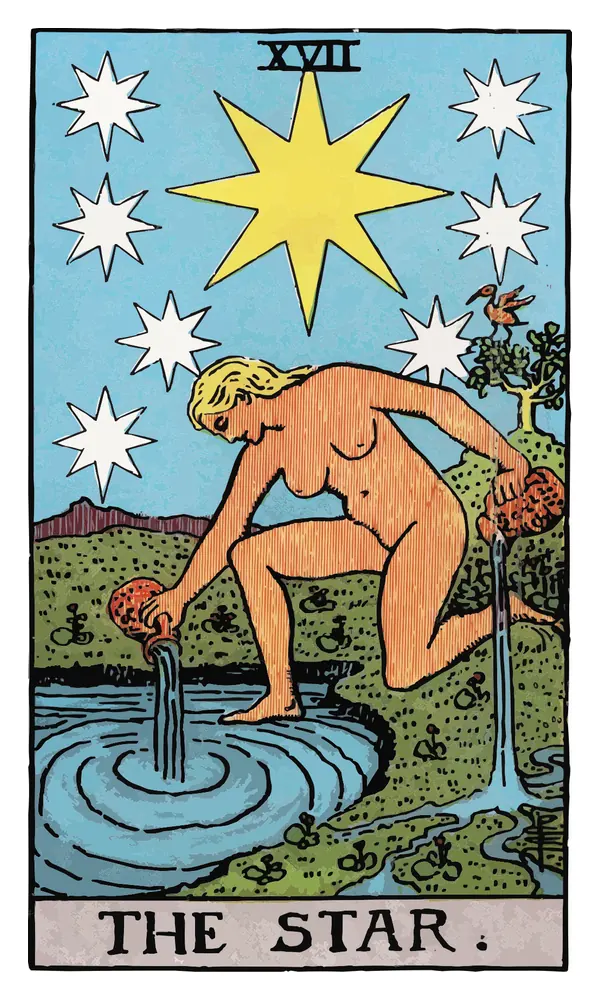
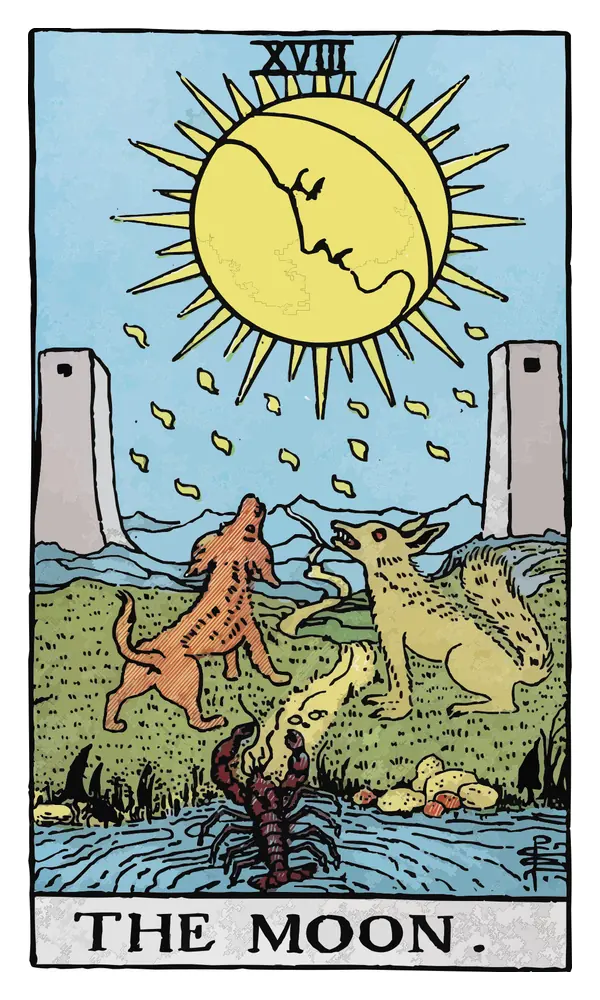
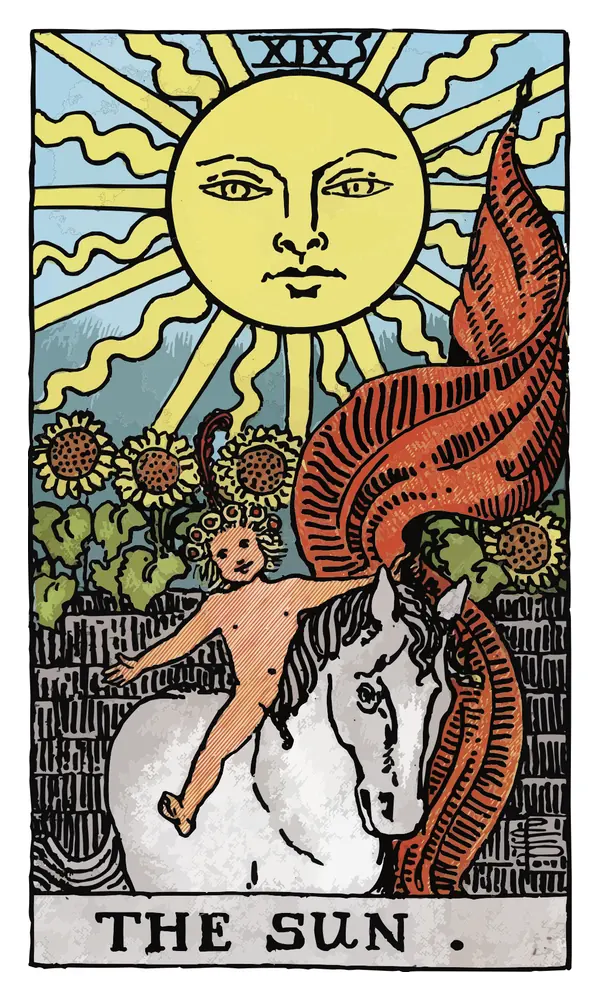
Say you see that the Star is traditionally paired with Aquarius, the Moon with Pisces and the Sun with the Sun itself. Those are conventions of one school, written down in a specific manuscript, not discoveries about the cards.
- The Star
- The Moon
- The Sun
Knowing this helps you read any table with the right level of trust. It is a map drawn by people, and different mapmakers drew it slightly differently.
Where did the Golden Dawn scheme come from?
Britannica credits William Westcott, William Woodman and Samuel Mathers with founding the Hermetic Order of the Golden Dawn. Its first lodge, Isis-Urania in London, opened in March 1888. The order drew on Rosicrucianism, Neoplatonism, Kabbalah, Hermeticism and ceremonial magic, and it was active mainly in Britain until the early 1900s.
The tarot material was kept in an internal manuscript known as Book T. According to Tarot Heritage, the order's black-and-white deck follows Book T closely. That manuscript is the usual root of the planet, sign and element assignments quoted today.
The scheme spread widely because two members, Arthur Edward Waite and Pamela Colman Smith, later made the Rider-Waite-Smith deck. The V&A dates their commission to 1909 and notes that the two met in the Golden Dawn. Many modern books therefore inherit the system, sometimes without saying so.
How do the elements map onto the Major Arcana?
The Golden Dawn gave three Major Arcana cards to the classical elements besides their other attributions. Biddy Tarot's summary of the system lists them as follows.
- The Fool is paired with Air.
- The Hanged Man is paired with Water.
- Judgement is paired with Fire.
- The World is paired with Earth.
The pattern is simple on the surface. The four elements also match the four suits of the Minor Arcana in most modern decks: wands with fire, cups with water, swords with air and pentacles with earth. Still, the suit-element link is a separate layer from the Major Arcana one, and sources sometimes blur them.
Note that the World appears twice in the scheme, once as Earth and once as Saturn. This is intentional in the Golden Dawn system, which gave a few cards a double role. Writers who show only one of the two are simplifying.
Which cards go with the seven planets?
The Golden Dawn used only the seven traditional planets, the ones visible without a telescope. Biddy Tarot lists the pairings below, and they match the standard scheme.
- The Magician is paired with Mercury.
- The High Priestess is paired with the Moon.
- The Empress is paired with Venus.
- The Wheel of Fortune is paired with Jupiter.
- The Tower is paired with Mars.
- The Sun is paired with the Sun.
- The World is paired with Saturn.
Two details trip people up. The Moon as a planet belongs to the High Priestess, while the Moon card belongs to the sign Pisces. And the Tower sits with Mars, a pairing that may surprise anyone who expected a more obvious link to Saturn.
Check any list you find against these seven. If a page gives the Moon card the Moon planet, it has probably merged two separate entries.
Which cards belong to the twelve zodiac signs?
Twelve Major Arcana cards carry a sign. The table below follows the Golden Dawn assignments as summarized by Biddy Tarot. It is the layout most modern tarot astrology references use.
| Sign | Card |
|---|---|
| Aries | The Emperor |
| Taurus | The Hierophant |
| Gemini | The Lovers |
| Cancer | The Chariot |
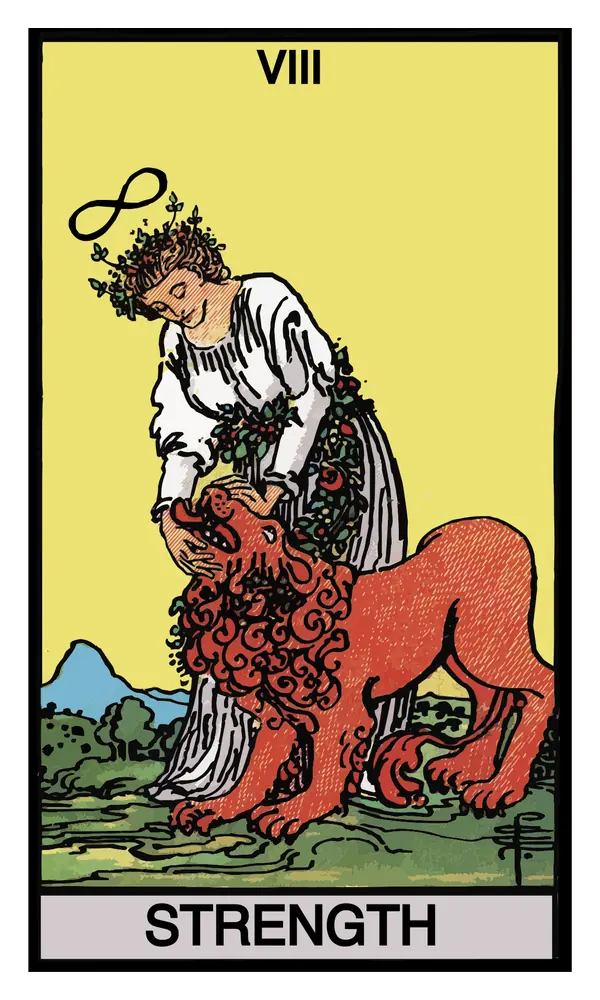
| Leo | Strength |
| Virgo | The Hermit |
| Libra | Justice |
| Scorpio | Death |
| Sagittarius | Temperance |
| Capricorn | The Devil |
| Aquarius | The Star |
| Pisces | The Moon |
The signs run in zodiac order, and the cards run in a mostly scattered order through the deck. That is one reason the system feels learned rather than obvious. Some links are easy to follow, such as the Lovers and Gemini, the twins. Others, such as the Devil and Capricorn, depend on the traditions you accept.
Why do Strength and Justice swap places?
In the Golden Dawn and Book T order, Justice was card 8 and Strength was card 11. The V&A notes that in the Rider-Waite-Smith deck Waite reversed this, so Strength became 8 and Justice 11. The astrological links stayed with the cards: Strength is Leo and Justice is Libra, in both orders.
- Strength
- Justice
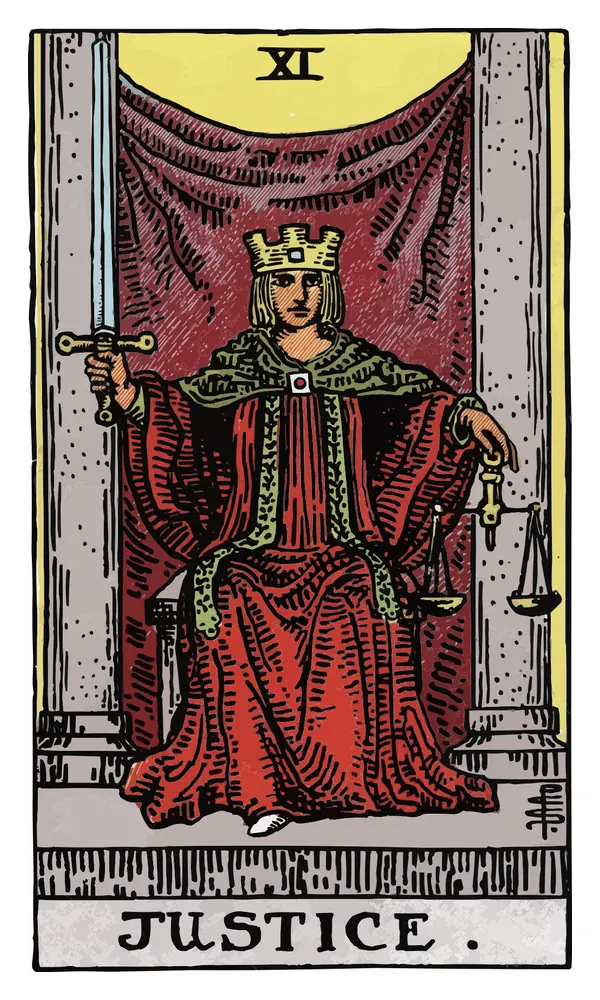
This matters if you build a table keyed by number. A list that says card 8 equals Leo works for older decks, but card 8 equals Libra would then be wrong for a Rider-Waite-Smith deck. Keying the table by card name avoids the problem.
There is a wider history behind the swap. Writers have long debated why Waite changed the order, and his own reasons are not fully documented, so treat explanations as theory.
What about Uranus, Neptune and Pluto?
The Golden Dawn did not use the outer planets. Biddy Tarot states that they were added to tarot by later interpreters. Common modern versions pair Uranus with the Fool, Neptune with the Hanged Man and Pluto with Judgement. These additions vary by author and are not part of the original scheme.
There is a logic to the reassignment. Those three cards were given elements in the old system, and some modern writers prefer a planet to a bare element. Others keep the older version, saying the original is the cleaner reference.
If you meet a table that mixes the two layers, look for notes on which is which. A good reference labels outer planet entries as modern. A careless one presents them as if they came from the Golden Dawn.
How to use the table with a birth chart?
A practical way to use the table is to look up the cards linked to your own Sun, Moon and rising signs, then study those cards' imagery, one at a time. Say your Sun sign is Virgo and your Moon sign is Pisces. You would look at the Hermit and the Moon card and note what you see in each picture, without treating either as a verdict about you.
Keep the exercise descriptive. The pairing only tells you which card a tradition associates with a sign, not what your life holds. If a personal question touches health, money or legal matters, a professional is the right person to ask.
Tool on Tarot Told Me
Birth card
Look up the cards linked to your birth date with the birth card tool.
A short list of habits keeps the work clean:
- Note which system your source uses before comparing tables.
- Key everything by card name, not by number.
- Mark any outer planet entry as a modern addition.
- Write down disagreements instead of settling them quickly.
Where does the system stop being reliable?
The Major Arcana table above is the stable part. Beyond it, the evidence is thinner. Hebrew letters, Tree of Life paths, the decans of the Minor Arcana and the Court card links each belong to a larger layer of the Golden Dawn teaching, and they need a primary text such as Book T or the writings of Crowley and Regardie for checking.
Tables online often differ on these details, and some quietly repair the older material to make it look neater. That is not a flaw in itself, but it means a clean-looking chart can hide a choice the author made.
A fair approach is to treat the Major Arcana scheme as a well-documented convention, and everything beyond it as the work of individual authors. Compare two or three sources, and trust the places where they agree.
Frequently asked questions
The usual source is the Hermetic Order of the Golden Dawn, founded in 1888 in London. Its members wrote the assignments into an internal manuscript called Book T. Later authors adapted and extended them.
No. Many decks follow the Golden Dawn scheme, but some authors and deck makers change individual pairings. The Thoth deck, for example, is built on Golden Dawn ideas yet has its own variations, so check the guidebook of your own deck.
No. The Golden Dawn used only the seven traditional planets. Uranus, Neptune and Pluto were attached by later interpreters, and their pairings differ between authors.
In the Golden Dawn scheme the World carries both Earth and Saturn. Some writers list only one of them to keep the table short, which is why you may see differences between sources.
No. You can learn the table card by card and look at the images first. A basic understanding of the signs and planets helps you notice why certain links were made, but it is not required.
Sources
- Britannica - Hermetic Order of the Golden Dawn (opens in a new tab)
- Biddy Tarot - Tarot and astrology in the Golden Dawn (opens in a new tab)
- Tarot Heritage - English occult tarot 1880-1940 (opens in a new tab)
- V&A - Rider-Waite-Smith deck (opens in a new tab)
- Wikipedia - Rider-Waite Tarot (opens in a new tab)