The Empress and the Emperor together: care and structure
What happens when tarot's third and fourth trumps share a spread? Here is how the pair is traditionally read, where it comes from, and how to look at it calmly.
By TaronicaPublished
In short
- The empress and emperor tarot pairing puts two neighboring trumps side by side: card III, often tied to nurture, and card IV, often tied to order.
- Read together, they are traditionally a study in care and structure, two different ways of looking after something.
- This guide covers their numbers, imagery, history and a calm way to read them as a pair.
What is the Empress and Emperor pairing in tarot?
An empress and emperor tarot pairing is a reading of two consecutive Major Arcana cards as one conversation. The Empress is traditionally linked with nurture, abundance and the senses, while the Emperor is linked with authority, order and boundaries. Together they ask how something gets both fed and held in shape.
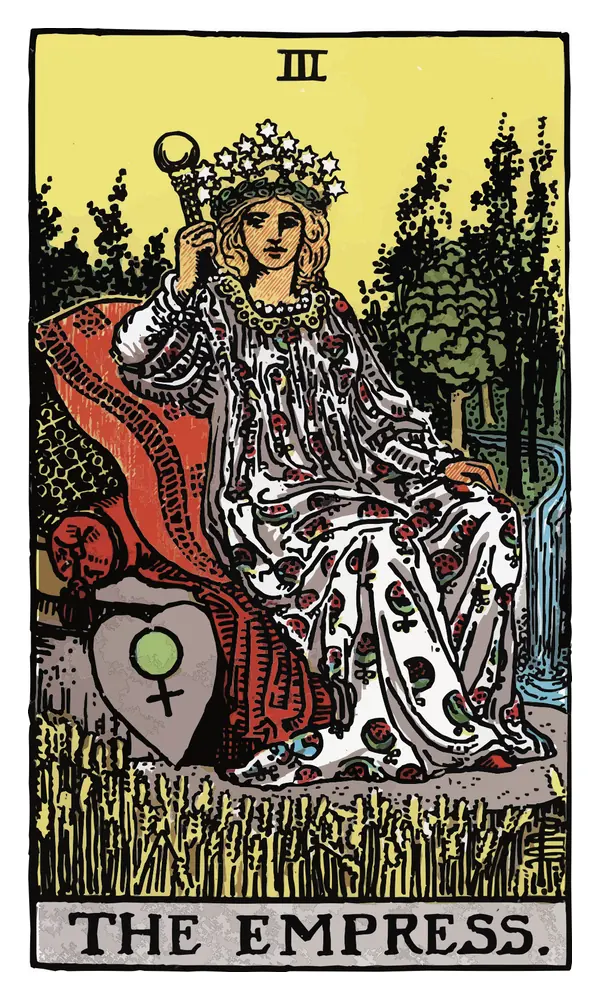
The Empress
The Empress, trump III, shown in the Waite-Smith tradition seated among wheat and greenery.
Read about The Empress on Tarot Told Me (opens in a new tab)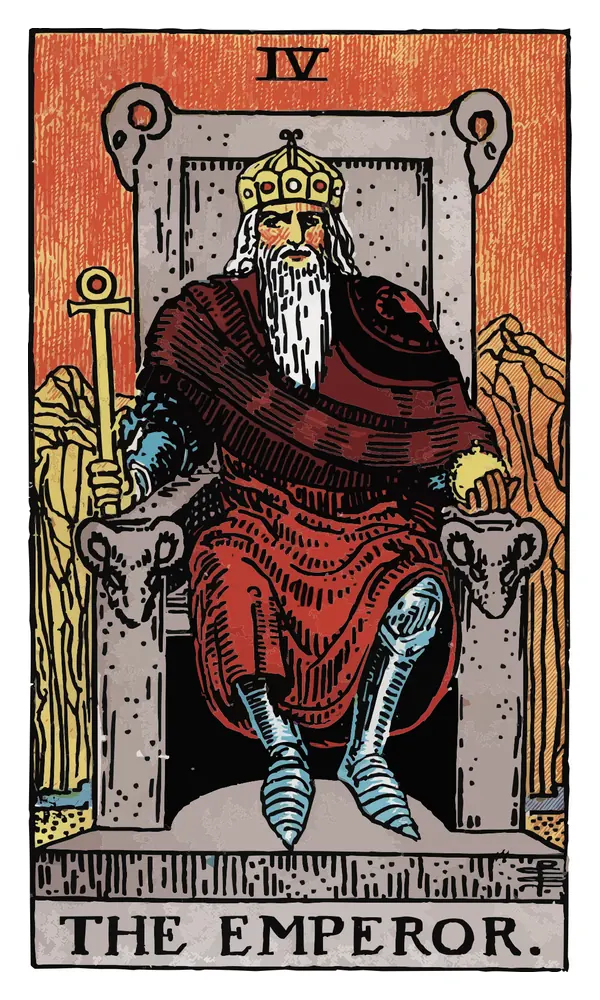
The Emperor
The Emperor, trump IV, shown in the Waite-Smith tradition on a stone throne.
Read about The Emperor on Tarot Told Me (opens in a new tab)The pairing is not an official spread or a rule written into the deck. It is a habit of readers, and a natural one, because the two cards sit next to each other in the trump sequence and are often described as a matched set. The care-and-structure framing used here is this site's own way of organizing that habit, not a historical doctrine.
That distinction matters. Tarot has no single authority that fixes what a pair of cards signifies, so any combination reading is an interpretation. What we can do is lay out the traditional associations of each card and see how they fit together.
Where do the two cards sit in the trump sequence?
The Empress is numbered III, the third trump in traditional decks. Before her come the Magician and the High Priestess, and after her comes the Emperor, numbered IV. The two therefore form a pair in the early part of the Major Arcana, just past the opening cards of the sequence.
Numbers add a second layer. In the numerological habits of tarot, three is often associated with growth, creation and something that expands beyond a pair. Four is often associated with stability, foundations and the four-sided shape of a table or a house. Those are conventions of reading rather than facts about the cards, but they line up neatly with the imagery.
Seen this way, the move from III to IV is a move from something that grows to something that is given a frame. Say you are thinking about a garden: the third step is planting and watering, the fourth is the fence and the schedule. Neither step is better, and the sequence simply places them in that order.
How is the Empress traditionally pictured?
In the Waite-Smith deck, illustrated by Pamela Colman Smith and first published in 1909, the Empress sits on cushions in a field. Ripe wheat grows at her feet, a stream runs behind her, and she wears a crown of stars. A heart-shaped shield marked with the symbol of Venus rests near her.
The tradition around these details is fairly consistent. Wheat points to harvest, water to flow and fertility, and the Venus sign to love and the senses. Modern readers tend to link the card with nurturing, abundance and the mother archetype, a framing noted in general references on the card.
It helps to keep the language careful here. The Empress does not decide anything about a person's life or family. She is an image that tarot readers have long used when they want to talk about care, growth, comfort and creative energy, and you can accept or set aside that vocabulary as you like.
How is the Emperor traditionally pictured?
The Emperor in the same deck sits on a stone throne carved with rams' heads, wearing red robes under armor. He holds an ankh-topped scepter in one hand and an orb in the other. Behind him rise bare mountains, with no field or garden in sight.
The contrast with the Empress is built into the images. Where she has soft cushions and living plants, he has stone, rock and metal. The rams are traditionally linked with Aries and with leadership, and the mountains suggest a long view and a firm footing.
Modern readings usually connect the card with authority, order, rules and protection. A caution applies, since the sources we checked for this article do not state the Emperor's modern meaning in a single authoritative way. Treat "structure" as a widely used convention of the tarot tradition and not a fixed definition.
How do care and structure work together?
The core idea of the pairing is that care without form can drift, while form without care can harden. The Empress supplies warmth, attention and room to grow. The Emperor supplies boundaries, routines and a clear shape. Each supplies something the other lacks.
Say you ask about a creative project that has been going well but keeps stalling. A reading of the pair might point you to two questions: where are you feeding the work, and where have you built it a frame? You might find plenty of enthusiasm and no schedule, or a rigid schedule and no pleasure left in the work.
This framing works just as well for a household, a team or a personal habit. The point is not to pick a winner but to notice which half is easier for you and which half you tend to skip. Many people lean naturally toward one of the two, and the pair gently names the other.
- The Empress
- The Emperor
What if one of them outweighs the other?
Tarot readers sometimes talk about each card in its excess. An Empress with no Emperor is traditionally described as comfort that slides into indulgence, or care that has no limits and so wears out the person giving it. An Emperor with no Empress is described as control that forgets the people it was meant to protect.
These descriptions are cautionary pictures, not diagnoses. If you notice yourself in one of them, treat it as a prompt for reflection and not as a verdict about your character or anyone else's. The cards cannot tell you what another person is thinking, and a reading of this pair says nothing about their motives.
It can still be useful to turn the question inward. Where do you give a lot of care without setting any limit? Where do you set limits without leaving any room for warmth? Questions like these are a gentle way to use the pair, and they do not require any belief in the cards.
Where does the pairing come from historically?
The two figures are older than the Waite-Smith deck by about four and a half centuries. The Morgan Library & Museum holds a Visconti-Sforza Empress attributed to Bonifacio Bembo, dated around 1450 to 1480 and made in Milan. The museum's exhibition labels group the Empress and the Emperor together as part of decks produced in the Bembo family workshop for the Visconti and Sforza dukes.
In those early decks the figures are rulers, a court couple in the visual language of the time, and not the nurturing and structuring symbols of modern reading. The earliest surviving tarot deck, the Visconti di Modrone, was commissioned around 1441. The Morgan notes that Bembo's workshop made several decks that were long credited to Bonifacio alone, and the attribution of individual decks is still debated.
Later occult writers layered new meanings on these courtly figures. Arthur Edward Waite discussed the Empress in The Pictorial Key to the Tarot in 1910, and Golden Dawn and Crowley-era systems linked her to Binah on the Kabbalistic Tree of Life, an attribution that varies from system to system. The modern idea of "care and structure" is a further layer, and it grew from reading these images, not from the original decks.
How to read the Empress and the Emperor together?
Start by looking at the images before any list of meanings. Notice the soft outline of the Empress's cushions beside the hard lines of the Emperor's throne, and ask which of the two you are drawn to. That first reaction is information about you, not about the cards.
Then move through three short questions:
- What in this situation needs feeding, attention or room to grow?
- What in this situation needs a boundary, a rule or a plan?
- Which of the two am I already doing well, and which have I been avoiding?
Write one sentence for each answer, and keep the sentences concrete. If your situation involves health, money, legal matters or safety, treat the cards as a way to organize your thoughts and take the real decision to a qualified professional.
Tool on Tarot Told Me
Three-card spread
Try a three-card draw and see whether the Empress and the Emperor appear, and in what positions.
Is this pairing a fixed rule?
No. Many readers use it freely, and others ignore it entirely. A spread can contain the Empress and the Emperor far apart, and their neighbors can change the tone of both.
If the pair shows up in the same reading, the questions in the section above give you a way in. If they do not, nothing is lost, because the care-and-structure frame can be applied to any two cards that suggest nurture and order. For other ways of building meaning from two cards, see the site's wider guide to tarot card combinations.
The most useful habit is to hold the reading lightly. The pairing is a tool for noticing, and its worth lies in the questions it raises for you, not in any fixed answer it hands over.
Frequently asked questions
In many modern decks they are drawn as complementary figures, and some readers describe them as a ruling pair. This comes from the imagery and from the Visconti-Sforza decks, where the figures were court rulers. It is a way of reading, not a fixed rule of tarot.
The Empress is trump III and the Emperor is trump IV in traditional decks. The numbering can differ in some modern or unusual decks, so it is worth checking the one you own.
Not necessarily. Readers often describe him as order, protection and a firm frame, and the stricter reading is one possible emphasis. The tradition leaves room for both a steady and a rigid sense.
No. The mother archetype is a common association, but readers also connect the card with abundance, creativity, the senses and nature. You can use whichever angle fits your question.
You can use it as a prompt to look at how care and limits are balanced between you and another person. It cannot tell you what the other person thinks or will do, so keep the questions about your own side of things.